In high-stakes environments like nuclear power or utilities, a single training gap is more than a simple mistake—it is a potential catastrophe. When the unthinkable is a daily possibility, organizations cannot afford to guess whether their workforce is ready. Instead, they rely on a rigorous system known as the Systematic Approach to Training (SAT).
Originally utilized by the Department of Energy (DOE) and other high-consequence industries, SAT is the logic that transforms complex hazards into controlled, professional mastery. It is a “fail-safe” for competency, ensuring that every training effort is purposeful, tracked, and—most importantly—effective.
The Philosophy: The Graded Approach
Before diving into the mechanics of the system, it is essential to understand the underlying philosophy: the Graded Approach. In the power industry, not every task is treated with the same level of intensity. SAT is not about “doing everything”; it is about doing what matters most.
The DOE defines the Graded Approach as a process where the level of analysis, documentation, and action is commensurate with the relative importance to safety, the magnitude of the hazard, and the complexity of the job. As the script notes, “You wouldn’t spend the same amount of money training a manager to read a report as you would training a reactor operator to handle a meltdown”. High risk equals high formality, balancing the effort of instruction against the magnitude of the potential hazard.
The 5-Step Continuous Loop
SAT operates as a continuous loop, ensuring that training programs never become stagnant and always reflect the current needs of the facility.
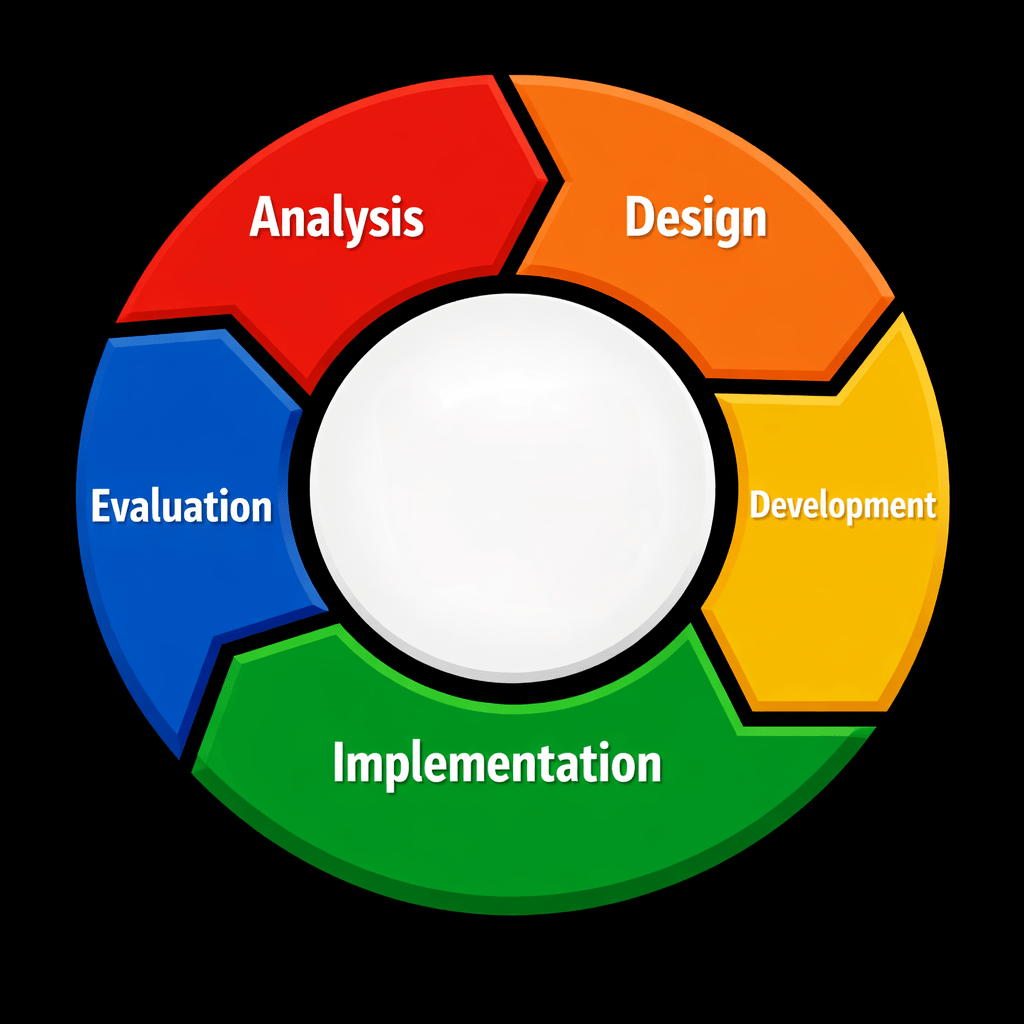
1. Analysis: Identifying the “Train-Worthy”
The process begins with Analysis, which provides the core information essential for establishing job-related programs. This phase identifies every single task associated with a job and selects the ones that are truly “train-worthy”. If a task is low-risk, a simple job aid might suffice; if it is high-risk, it moves to the top of the list for formal instruction.
Several types of analysis can be utilized:
- Needs Analysis: Defines deficiencies between actual and desired performance and identifies whether training is the correct solution.
- Job Analysis: Develops a comprehensive list of tasks for a specific position.
- Task Analysis: Examines selected tasks to identify the specific skills and knowledge required for performance.
2. Design: The Blueprint
Once the tasks are identified, the Design phase begins. This is where the “blueprint” of the training program is written. Designers create learning objectives—measurable goals that prove a trainee can perform under specific conditions to a set standard. This phase removes the “fluff,” focusing strictly on what is job-based.
3. Development: Building the Tools
In the Development phase, the actual tools for instruction are produced. This includes classroom lesson plans, simulator guides, and On-the-Job Training (OJT) checklists. For high-hazard tasks, these materials are incredibly detailed to ensure that every student receives the exact same high-quality instruction, regardless of the instructor.
4. Implementation: The “Go” Phase
Implementation is where the training is delivered. Qualified instructors use the developed materials to conduct training in various settings:
- Classroom: Focused on theory and fundamental knowledge.
- Simulator: Providing a high degree of physical and functional fidelity to the actual job.
- On-the-Job Training (OJT): Structured mentoring and practice right on the shop floor.
The ultimate goal of this phase is mastery. Trainees are evaluated to ensure they have met the learning objectives before they are considered qualified.
5. Evaluation: Closing the Loop
The loop never truly ends. Evaluation checks if the training actually worked. Are trainees passing their exams? Are they performing safely on the floor?. If a performance gap is found, that data is fed back into Step One to refine the program. This ensures the maintenance of a competent workforce and continuous improvement of the training itself.
Alternative Techniques for Efficiency
While the traditional SAT process can be resource-intensive, the DOE Handbook highlights alternative techniques that streamline the process without sacrificing quality:
- Table-Top Method: A facilitator works with a small group of Subject Matter Experts (SMEs) and supervisors to extract information and develop materials quickly.
- Verification: Saving time by using or modifying training materials from other similar facilities.
- Document Analysis: Determining required skills and knowledge directly from existing operating and administrative procedures.
- Templating: Using a list of facility systems or generic learning objectives to rapidly determine training content.
The Power Learner Takeaway
As the DOE Handbook states, “The goal of training is to develop and maintain a competent work force”. SAT is not merely paperwork or a bureaucratic requirement; it is a shield against human error. By focusing only on what is “Job Based,” organizations avoid wasted effort and maximize safety.
A systematic approach ensures that training is sequential, tracked, and constantly evaluated for effectiveness. If you work in a high-consequence industry, SAT is your best friend in the pursuit of professional mastery.
By: Ben Rogers
 ™ The Power Learner